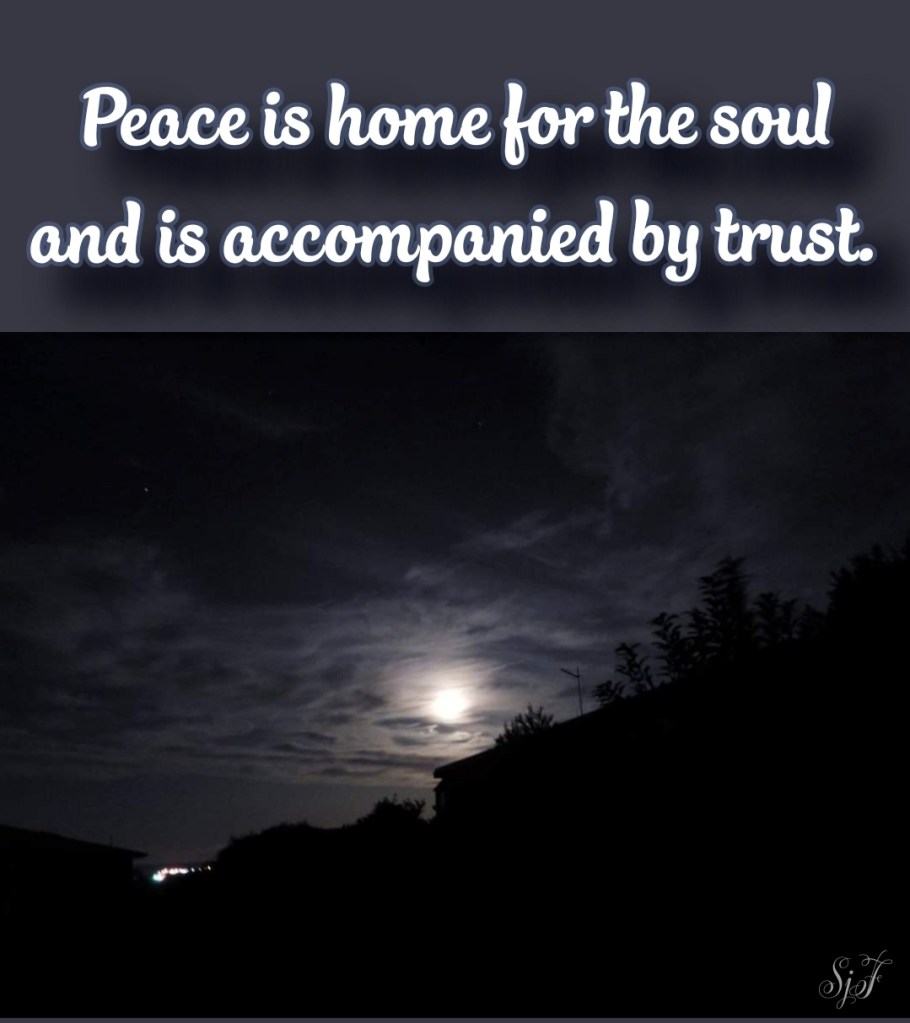
Peace and trust connect with the spirit’s sense of sanctuary. The soul seeks sanctuary to feel free to grow. Our connectedness to the natural world and the cycles a necessity to thrive. Ripples of change, tides of times are reflected in our choices in life. Change comes to challenge and to comfort, to teach and to offer growth. Life’s journey towards illumination is an ever-changing dance throughout life. Patterns in the music we dance to are mirrored all around us when we blend into and are at peace with the natural world around us, and we are but a small part of it. Trust is the home within which the soul is accompanied by trust.
My loyal guardian here on earth, Saw me in my full armour. She took me by the hand, And spoke to me the truth ‘You’ve been fighting the entire time that I have known you – Your warrior must now rest. She has much work ahead, Many choices to be made. Make them with your clarity, But only after rest.’ ‘I shall not leave your side, I will carry what I can.’ Eyes now locked she heard me, My silent cry for help. Again, she gently told me ‘Your warrior must now rest, Feel no fear – you’ve faced far worse This time will make more sense, I swear to you it shall.’ Into the cold dark night she departed, Her silver glow surrounding her. The warrior must now rest, For there are things to come I know, That will be my greatest test.
In Old Norse society fate and destiny are themes we see often emerging. Whether it is in an epic saga we read of hero’s steadfast faith in fate, or a movie that recites the belief that one’s destiny is in the hands of the gods they worship. How often do we stop and consider what fate and destiny really are?
It is said that fate is the predetermined course of events that is inevitable, thus it cannot change. So, are fate and destiny one in the same or is there a difference subtle or obvious? For me, destiny is about the predetermined course of events that can be shaped by an individual. We are not powerless beings in the hands of fate, but we do have power to shape our destiny, inevitably shifting fate. Are you living your fate or creating your destiny? Fate is the life you lead when you put yourself into the unknown. When trust in trust itself becomes important, a remarkable choice must be made. By choosing our own destiny we put ourselves into parts of the world we may feel safe in, and those we may not. Life involves a certain level of risk taking if it is to be lived to the fullest.
Where we are born, to who, and what we look like fate has determined. We can stay on a safe life route and go along with the show, or we may have to face things that mean other things are destined to occur. Fate and destiny work together. Destiny is more seen as outside of the domain of free-will for example, I may be destined to travel to a certain place and my choices and free will, will make that happen and this will offer life experiences that may be fated.
We are all destined to feel reactions and responses to fate itself. That is to be human and mortal. Because human nature has the need to believe in something divine, it does not necessarily mean that a god or religious path fulfils that desire and search for faith. Love may be what is divine to some and when faith, respect and love are combined we have a chance to stand on solid ground from which to thrive and grow.
As the world progresses in what seems a state of decline many are seeking and searching for purpose and meaning, for faith and for divinity. What if we turned that search inwards? What if the time spent searching for an omnipotent deity was turned into learning about self-respect and love, all forms of love? Love for the family and friends in our lives, for the natural world that sustains us, for gods, goddesses, deities, and entities, for music and arts of all sorts. We would then become fully responsible for how we act and react to the world around us. We would be guided by our internal compass and not a code or biblical set of rules. What if life is as simple as that?
Believe in whatever you want to, but faith and the divine are mostly found in love. Have faith in what you believe is love. Love the divine about all of you and feed that faith which nourishes the soul.
Wandering through the long grass she felt the freedom she never felt. walking through the forest trees swayed to the bird songs. Reminding her everywhere was beautiful colours blossomed and scents kissed her breath. At last, she was free, and freedom was home.
Sometimes you must begin at the end to understand that in the beginning and in between there are many streams, rivers, branches to explore. The ending of a story is often the beginning of many more.
Susie j Folmer, 2022
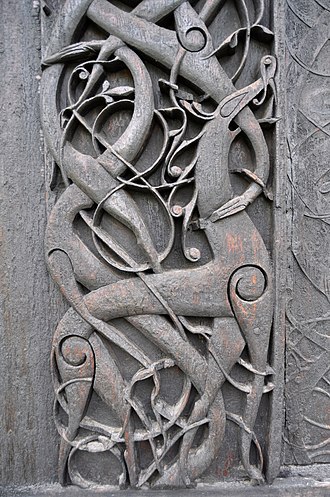
The north portal of the 12th-century Urnes stave church has been interpreted as containing depictions of snakes and dragons that represent Ragnarök – A World History of Architecture, Fazio, Moffett & Wodehouse 2003, p. 201.
Terms such as ‘apocalypse’, ‘twilight of the gods’, ‘the doom of the powers’, ‘the fate of the gods’ and ‘the end of time’ have been used to describe Ragnarök which are the events leading up to the ill-fated destruction of the cosmos and everything in it. It may be a timely thing that I sit and consider drafting this article at a time in the world when we may be headed in the same direction, the ending, and why it is time to explore the Ragnarök events that we know from Old Norse Mythology. This significant story describes how the world might have come into shape and would end according to Old Norse Mythology.
Eddic literary sources such as: Völuspá, Vafþrúðnismál, Helgakviða Hundingsbana II, Gylfaginning, Oddrúnarkviða and Baldrs Draumar offer insight into how Ragnarök was told of and interpreted in early literature in at times a cleverly cryptic way while other literature offers a more detailed and creative account. Ragnarök can be viewed as the overarching prophecy told to us in Völuspá which refers to the great upheaval of social, environment and natural order of the world and the ending of what is known. Author, Maria Kvilhaug in ‘Seed of Yggdrasill’ offers us a more literal translation of Ragnarök, “The Destinies of the Rulers”. “Ragna is genitive plural of Reginn (“Ruler”), whereas rök (n.pl.) refers to “developments, “circumstances”, “causes”, “ends” or “destines”. The rulers in question are usually thought to be the gods…. the word rökr (n.sg) refers to “twilight”.” (Kvilhaug M, 2020, p 514)
It appears throughout the Eddic writings that the pantheon of gods is under constant threat and always looking ahead for where those threats might come, building giant walls around their realm, and often going on quests to rescue kidnapped goddesses who provide them eternal life. In these writings we also see Óðinn seeking ancient wisdom and in his quest for this seeks out the Völva in Völuspá to ask her to investigate the past, present, and future and for him she recounts the events that led up to Ragnarök and all that she could tell would occur and come of it. Óðinn knows that Ragnarök is the ultimate battle, and it will be the end of the gods, destroying the world as they know it to be.
Throughout the literature it also may seem as if Óðinn is trying to delay the inevitable and is taking precautions in actions such as in the binding of Fenrir to postpone what is fated, and even though he knows of the events and of Loki’s instrumental role in the last battle he still makes a blood oath with him and brings him into the Ásgarðr fold. Was Óðinn attempting to influence and change what was fated? In life if we try to avoid certain outcomes, do we then set in motion a chain of events that will ensure the unwanted conclusion? I think the message here is to be careful with knowledge and not deliberately upset the laws of nature, or we too may face consequences we didn’t see coming.
Völuspá, in my opinion, is one the most important and insightful pieces of all the Eddic poetry and contains much for the seeker to find in the riddles to unravel and complex metaphors, parables, and kennings. As Maria Kvilhaug importantly highlights in her invaluable body of work, ‘The Seed of Yggdrasil’, “We live in a time and age where we have learned to read our myths literally…. thus, have been conditioned to think of dooms day prophecies as literal descriptions of an apocalypse that is to take place in the near future….”. In this statement Maria is giving us a marvelous indication of what can really be discovered in exploring this story in Old Norse Mythology. It cannot simply be a fable of good versus evil and good wins the day, as Old Norse-Icelandic, skaldic-eddic literature is distinct in its way of hiding things in plain sight, and in its unique and complex legendary literature style.
This colossal event ‘Ragnarök’ comes in the form of a battle between order and chaos, leading to deaths of many gods and their adversaries and the birth of a new world order. While there is a slight contradiction in the ultimate ending and rebirth aspect which is possibly where the reader may be able to discern the pre and post Christian influences within this breadth of literature, and in line with this we see two dominant versions of the myth of Ragnarök seem to emerge from the Norse sources. In one, Ragnarök is the ultimate end of the cosmos, and no rebirth follows it. In the other, there is a rebirth. Christian writers would not recount stories of pagan fully if at all which leaves us at times with patchy and contradictory records and these inconsistencies emerge. Yet this should not render all Old Norse-Icelandic literature invalid as much was preserved through the creative and unique skaldic oral history and through those who did write these orally told stories down when ink and vellum arrived in Northern European Scandinavia
Simek explains Ragnarök as, “the final destiny of the gods. The term for Nordic eschatology in the Edda…. Nordic cosmology includes a destruction of the world which involved the gods as well as man. Thus, the presence of the gods is limited and not without reason: like man they have much to blamed for because of crimes and wars.”(A Dictionary of Northern Mythology, pp259, 1996)
Norse mythology tells us of ‘fimbul-winter’ (fimbulvinter / fimbulvetr) which is the monstrous winter three times the length of a normal winter with no summers, and when the sun has no force at all. In Snorri Sturlusson’s Prose Edda Ch 51 ‘The High One Reveals the Events of Ragnarok we hear when Gangleri asked, ‘What is to be said about Ragnarok?’ that ‘High’ describes this time by replying,
“There are many important things to be said about it. First will come the winter called Fimbulvetr (Extreme Winter). Snow will drive in from all directions; the cold will be severe, and the winds will be fierce. The sun will be of no use. Three of these winters will come, one after the other, with no summer in between. But before that there will have been another three winters with great battles taking place throughout the world.”
Byock J (trans.) The Prose Edda, 2005
This savage weather is matched by moral chaos where brothers fight and kill their own brothers. The giant wolves swallow the sun and moon, and the stars form the nights sky disappear before a massive earthquake brought on by Loki’s final convulsion brought on by the venom of a snake uproots trees as the earth shakes, and the fetters and bindings holding giants and monsters controlled by the gods break. This leads to moral, social, and topographical chaos. One may see that the term fetters in the poetry that describes these events may also refer to the “fetters” that bind and hold social order in place. Völuspá st.45 paints this picture in a stark and bold way.
Brœðr muno beriaz ok at bǫnom verða[z] muno systrungar sifiom spilla. Hart er í heimi, hórdómr mikill —skeggǫld, skálmǫld —skildir ro klofnir— vindǫld, vargǫld—áðr verǫld steypiz. Mun engi maðr ǫðrom þyrma.
Brothers will fight and kill each other, sisters’ children will defile kinship. It is harsh in the world, whoredom rife – an axe age, a sword age – shields are riven – a wind age, a wolf age – before the world goes headlong. No man will have mercy on another.
Völuspá 45 Dronke 1997
Völuspá stanza forty-five highlights a major taboo among the breakdown of social order when “brothers will fight and kill each other, and sisters’ children will defile kinship” as in Old Norse society those kinship ties were what bound them together with such loyalty as to defend one another to death if necessary. Frith, kith, kin and grith values were held in highest esteem and were the foundation of societal structures.
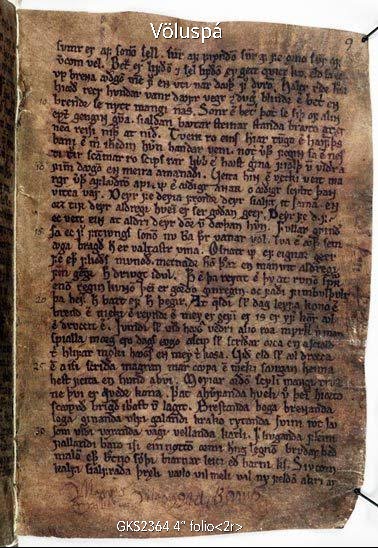
Manuscript page of Völuspá GKS2364
The last battle of the gods and giants fought amongst a world of flames which reaches the heavens. The gods with their supernatural powers and attributes are not flawless and their efforts are often hampered by their quasi-human nature. The pantheon is engaged in an ongoing struggle with giants, at times serious, and at other times humoristic and farcical. This ultimate battle proves fatal for both sides, gods, and giants alike. Many of the events leading up to Ragnarök become intensified by the premature death of Baldr, the much-loved son of Óðinn and Frigga.
Importantly, and perhaps giving us today some sense of hope, the seer in Völuspá also does not end her prophecy with the end of the war and world as it was but she goes on to tell of Baldr in the underworld and that he and the children of other gods will rebuild society, ushering in the new world, or the ‘golden age’ of society. It is Baldr who is said to be reborn when the new world emerges. Baldr symbolizes the spring, the thaw, new beginnings in his place in the old stories. To save Baldr and ensure his life is not ended Óðinn takes a journey to the underworld to make a deal with Hel. She asks in return for Baldr that all in the realms should weep for Baldr and then she would release him. One giantess refuses to weep for Baldr so he must stay in Hel with Hel. The gods retaliate by taking Loki, who they hold responsible for Baldr’s death, and have him bound with his son Narfi’s entrails and a venomous snake is hung above his head dripping poison on him which causes him to shake so violently the earth shakes. Although his wife Sigyn attempts to catch the venom in a bowl she holds above his head some still drips on Loki causing him to convulse and shake so much so the world shakes.
The fetters that bound Loki and all those who the gods had secured to create the world that they had are finally broken lose from all the shaking. The oceans surge onto land and the Jörmungandr, the Midgard Serpent, in a rage will come ashore to join the fight spitting poison into the sky and sea from where the sons of Muspell will come with Surtr in the lead to ride over Bifrost breaking it. Heimdall blows his horn, Gjallarhorn, to waken and alert the gods and goddesses who hold a parliament and prepare for their ultimate battle. “Axe-age, sword-age, storm age, wolf-age, ere earth is overthrown. Three cocks will crow, one in the gallows-tree, one in Valhalla, and one in Hel; the pursuing wolves will swallow up both Sun and Moon, Earth’s bonds will crack, the mountains fall.” (Jones G, 173, p318)
Is this story simply about an ultimate ending when such complex parables, riddles and ciphers are weaved throughout it? This tremendous battle, Ragnarök, and all the literature that has included it are worth the time to study to understand the complex narratives being told in more detail. When we start to consider the motif’s gods and entities symbolize a whole other story emerge which reveals the ethos, norms, mores, value base and customs of the time. After the battle is over. while the gods and entities are burned and killed, all mankind at the time are destroyed, there will be a rebirth of a new world. Every ending has a new beginning. Baldr is reborn as are others and a new realm is created where Asgard once was, and a new earthly realm will be born. As Hurstwic recounts.
“Two humans, Líf and Lífðrásir, who hid themselves deep within Yggdrasil, will see light. For although the sun was eaten by Skoll, she will give birth to a daughter no less fair, who will follow the same sky-path and light the world. Líf and Lífðrásir will have children; there will be new life everywhere on earth. With the rebirth of the world after Ragnarök, the golden age of the Norse gods will return. A radiant hall will rise that no flames of perdition can touch. In that hall, the noble warriors who fought alongside the gods will live on in joy. The ignoble will be carried away by a dragon to be eaten. The gods will find the golden playing pieces of their board game in the shining meadow, and they will build on the triumphant foundations laid down by Óðinn.”
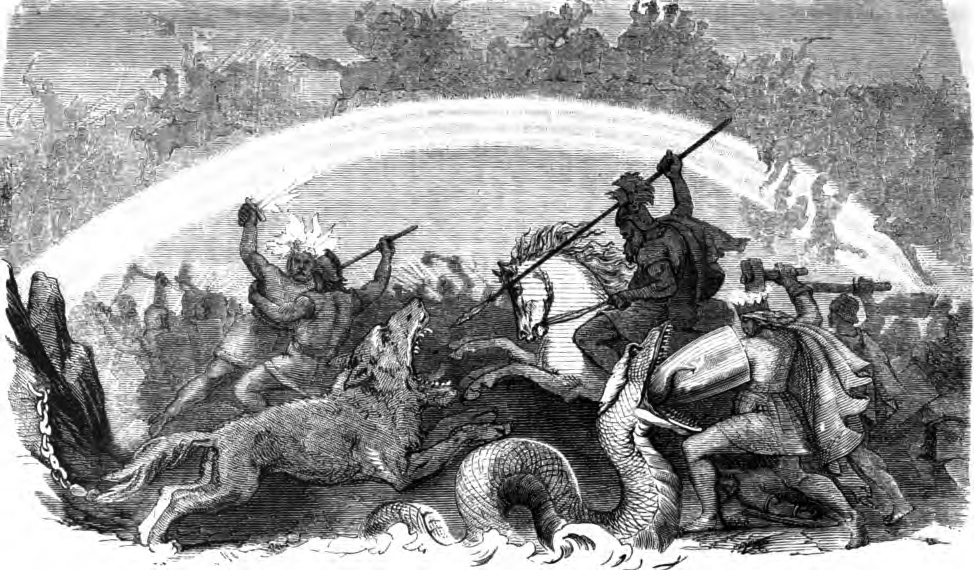
“Battle of the Doomed Gods” by Friedrich Wilhelm Heine (1882)
Along with literary sources archaeological evidence such as the Rök stone, Thorwald’s Cross, Gosforth Cross, Ledberg stone, and the Skarpåker stone add layers of meaning for us to interpret the interesting meaning of Ragnarök in their interesting depictions that match up to later Eddaic prose and poetry that tell of the Norse Mythological end of days, Ragnarök. From comparing these to the literature we can see this story survived a long history and was not a construct of the new Christian dogma that had come into being after the year 1000AD in Iceland where much of this literature was scribed.
There are several different theories regarding what Ragnarök was, and what it meant, in the past, the present, and the future. Several historians, researchers and authors have offered interesting insights. I think we will all interpret aspects of Ragnarök differently so there will not be any one straightforward way to answer what is or what was Ragnarök. While this article is focused on mythological and cosmological aspects, I encourage the reader to delve into the myriad of emerging ideas that surround this key area. Scholars such as Dr Rune Hjarnø Rasmussen present compelling information on the current state of world affairs and the climate catastrophe we now face. (Links to Rune’s work are listed below)
Helge Andersson Rök runestone, Sweden –
Could Ragnarök described in literature have been based on a considerable environmental disaster that led to great social change? Is Ragnarök a prophecy telling of the end of everything, the destruction caused by man, gods, and the earth itself as a living being? Are people reborn into a new world, or is the end really the ending? There are many questions, there are some great interpretations of literature, which offer sound philosophical reasoning. Nordic Animism offers some incredibly interesting and profound videos and reading that cover this area and I urge you to seek those out (links below).
Like many of the Eddic poems and prose pieces we still have today, it may be left to individuals and groups to decide what they believe it to be. The intimate relationship between myth, religion, science, psychology, and philosophy are most evident in this theme of Eddic lore, and various aspects of life’s mysteries are addressed by these different disciplines. Merely the act of delving into these ancient concepts could be the reason they were left to us. As there is no written record of how Ragnarök may have once been understood today we must rely on delving into the deep realms of Norse Mythology, history, and culture to understand it and decide what we believe it to be. Therefore, there will always be areas of gray, areas of uncertainty and areas where there are no definitive answers to many questions. The nature of oral history often leaves us with these lingering questions based on the lack of concrete information. Equally, so too does oral history correct, confirm, and add to the historical records.
Susie J Folmer, September 2022
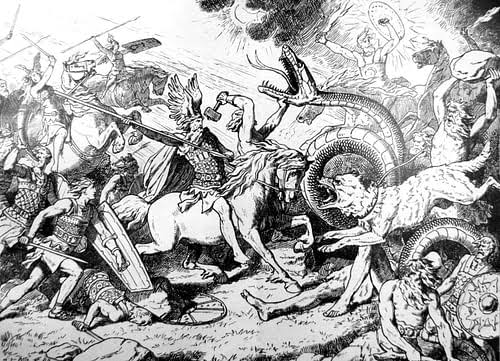
Ragnarök Illustration by Johannes Gehrts
I wish to also give special thanks to Cody Shaffer of Eldrvak music for his song “…And The Sky Turned Black” that I listened to, and was inspired by, while I dove deeply into this complex area of Norse Cosmology – you can find the song here – https://www.youtube.com/watch?v=rkfZWi-bVcU
My background encompasses over 30 years of personal, practical, and academic practices in areas of Sociocultural Anthropology, History, Sociology, Psychology, Indigenous Studies, Criminology, Philosophy and other Social Sciences, which led to my Monash Masters and PhD Candidacy.
My personal spiritual journey has brought me to realise I enjoy an Animist approach in my Pagan Practices, including Shamanistic practices as central to my spiritual and ritual practices. I have studied with the Scandinavian Center for Shamanic Studies and enjoy immersive spiritual experiences. Having a Palawa mother and a Northern European father means that I am fortunate to draw upon cross cultural knowledge that guides my life and life’s work.
I hope you enjoy the writing both academic and creative, photography and art that I shall be sharing to my blog over the coming years. Please feel free to share pieces, I only ask my copywrite status be respected and any work quoted or used gives due credit. Thank you, Susie J Folmer.
Introducing ourselves isn’t always easy. It may be the one thing many writers find a challenge, the most challenging part of writing. Where do we begin? What do people want to know about the person behind writing and art? For that reason, I am going to take my time to finalise how I will introduce myself. It is never a “final chapter” as we are constantly adding to our life’s story and with that how we introduce ourselves to the world.
You may be wondering what “limaje”, the name of my page means, and it is a word I created in honour of 3 my familiars, my companions in life who have been by my side every step of the way. It honours them and is a thank you to them for their unconditional love. They are in honour of my dogs, Lily who is in my life now, Mali who has passed on and Jes who has also passed on. All of these three girls hold a special place in my life not just as companions but my guides, my carers, my helpers and my inspiration.
After many years I know it is time to create a blog space to share my creations, the things I learn, things others might want to learn that I may know about or have researched for the purpose of sharing. Some creative, some academic, some will be a mix of both. As I wade through my pages of years of handwritten notes, I have realised I have been writing for a long time about a great manner of things, and not just the Academic literature that I thought had taken up the bulk of my time. If anything, the opportunity with Monash has fueled my passion to follow my dreams. Monash gave me a career base that has taken on many shapes and forms, many roles and travels, many experiences I would never change. I cannot neglect my start with UTAS where I was shown my potential and the potential of the world. They were my springboard in the 1990’s and some decades later, several degree’s on, amazing career opportunities and, many life experiences added to the book of me I am honoured and proud to be a part of both learning centers (Universities).
This intro is far from finished so I hope you will return to share in the growth …
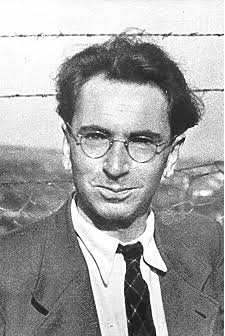
This photo of Viktor Frankl was taken shortly after his liberation from the Nazis in 1945.
Viktor Emil Frankl: Born 26 March 1905 – Died 2 September 1997
“When we are no longer able to change a situation, we are challenged to change ourselves.”
Viktor Emil Frankl
Viktor Frankl, from Vienna, founded logotherapy, a school of psychotherapy that describes a search for a life’s meaning as the central human motivational force. An accomplished neurologist, psychiatrist, philosopher, and author. In 1948, Frankl earned a PhD in philosophy from the University of Vienna with his dissertation, The “Unconscious God”, which examined the relationship between psychology and religion. He advocated for the use of the “Socratic dialogue” (self-discovery discourse) for his, and other’s clients to connect with their spiritual unconscious.
In Man’s Search for Meaning, Frankl states:
“Freedom, however, is not the last word. Freedom is only part of the story and half of the truth. Freedom is but the negative aspect of the whole phenomenon whose positive aspect is responsibleness. In fact, freedom is in danger of degenerating into mere arbitrariness unless it is lived in terms of responsibleness. That is why I recommend that the Statue of Liberty on the East Coast be supplemented by a Statue of Responsibility on the West Coast.”
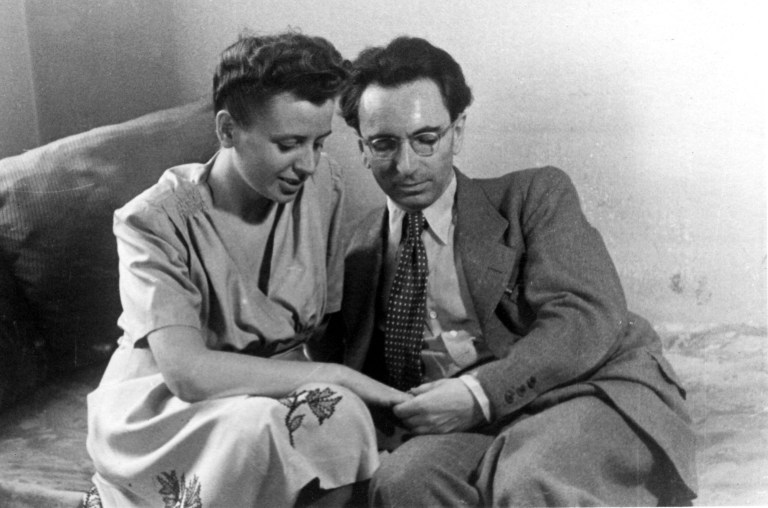
Viktor and Elly Frankl
Frankl was an Austrian neurologist, psychologist, philosopher, and Holocaust survivor. In 1942, just nine months after his marriage to Tilly Grosser, Frankl and his family were sent to the Theresienstadt concentration camp. His father died there of starvation and pneumonia. In 1944, Frankl and his surviving relatives were transported to Auschwitz, there his mother and brother were murdered in the gas chambers. His wife Tilly died later of typhus in Bergen-Belsen. Frankl spent three years in four concentration camps. All of his immediate and extended family and his beloved wife were murdered by the Nazis.
Frankl proposed that all of us are motivated to seek a higher purpose, even when we face unimaginable circumstances such as cruel death camps, starving, murder, barbaric experients while surrounded by barbed wire and vicious men armed with machine guns. Frankl originally developed his framework for his powerful ideas while he was practicing psychiatry in Vienna before the Nazi occupation. He saw how he could help patients overcome their suffering by making them aware of their life’s calling. His treatise, stashed in his coat, was literally lost when he was imprisoned.
He became a renowned psychiatrist, philosopher, and writer, Viktor Frankl, who stands in high regard amongst the other 20th-century thinkers. Some controversy exists today while Frankl’s ideas continue to be studied, refuted, debated, and argued by learned and well-intentioned academics. It is always healthy to consider and debate aspects of developing practices, as Frankl did himself in reflecting on his studies with Sigmund Freud.
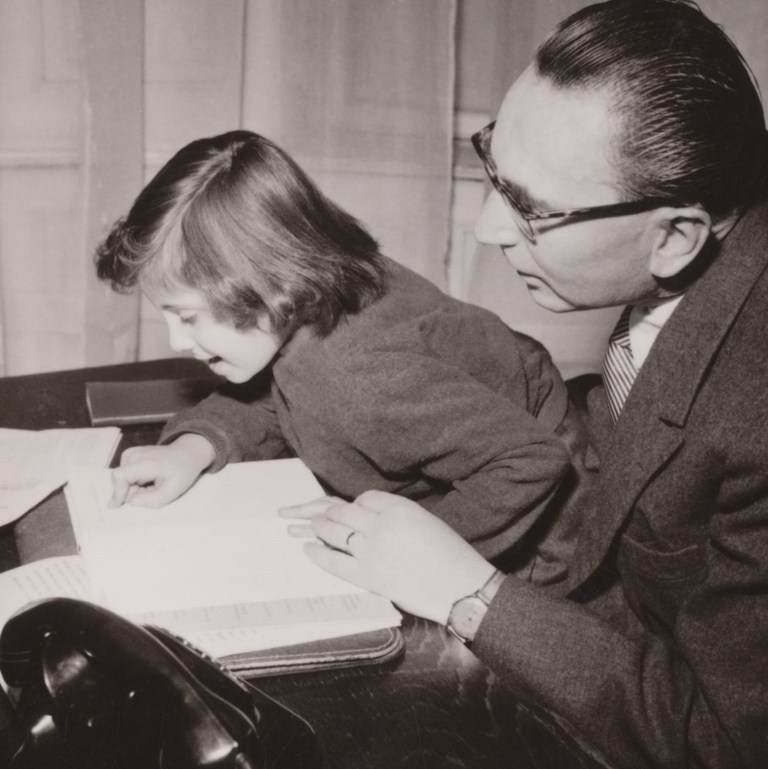
Frankl certainly saw more adversity than most in one lifetime. From freedom to doom to freedom, assessing and assisting many patients, and achieving high career accomplishments. His daughter, and now grandchildren have followed in his footsteps. With his second wife, Elly Frankl, he had one daughter, Gabriele, who went on to become a child psychologist.
Viktor Frankl with his daughter, Gabriele, in 1955
References:
Man’s Search for Meaning. An Introduction to Logotherapy, Beacon Press, Boston, 2006.
On the Theory and Therapy of Mental Disorders. An Introduction to Logotherapy and Existential Analysis. Translated by James M. DuBois. Brunner-Routledge, London & New York, 2004.
Man’s Search for Ultimate Meaning. (A revised and extended edition of The Unconscious God; with a foreword by Swanee Hunt). Perseus Book Publishing, New York, 1997.
The Doctor and the Soul. From Psychotherapy to Logotherapy by Viktor Frankl, New York: Vintage Books, 2019
~Dísablót~ The Dísablót was the blót (sacrificial holiday) which is held in honour of the female spirits or deities called dísir and also the Valkyries, some of the Norse goddesses, the nornir, the landvættir, Landdísir, and a myriad of other female vættir. They are tutelary (guardian) spirits, or spiritual beings. Disir are always female. The term ‘dísir‘ is a broad and collective term for different types of female spiritual or unseen beings. These female spirits or ‘beings’ that are associated with fate. They may be a type of wight attached to a family’s fate: i.e luck, health, ørlög (soul inheritance), wyrd and hugr (soul). They act as protective spirits of individuals, households, and your entire kindred and are considered vital deities to worship and they are primary focus of offerings for luck against enemies in war.
The blót sacrifice is often offered in the form of a sacramental drink, meal, or feast which is usually placed or poured over a hörgr (stone altar), vé (shrine), lund (grove), haug (sacred mound), or other sacred location such as a hof (temple). The altar where the Dísir is worshiped is called dísarsalr. These outdoors altars of stone called, Hörgr (plural hörgar). They are built from stones piled, heaped, or stacked to create a space to enjoy fire, drinks, food, and stories in good company. It is a way to feel connected, through fresh air and natural comfortable surroundings.
How each person chooses to have their symbolic time is up each person. In many ways, blóts are not as formally structured as other religious rites.
Arith, and others, have shared their recited pieces for this occasion;
~ ”In this day, honor your female ancestors, remember them and their deeds, how they fought to keep the peace, love and order in the family, never forget their importance, because you one day, shall joined them and become an ancestor of someone”(Arith Härger). ~
The Eddas and Sagas contain many references to this time and ritual that we too, can hold in honour of our kindred, our ancestors, the gods and deities and entities.
Segðu þat it tíunda, allz þú tíva rök öll, Vafþruðnir, vitir, hvaðan Niörðr um kom með ása sonom, hofom og hörgom hann ræðr hunnmörgom, ok varðat hann ásom alinn
English translation: Tenth answer me now, if thou knowest all The fate that is fixed for the gods: Whence came up Njord to the kin of the gods, Rich in temples and shrines he rules, Though of gods he was never begot?
~ Poetic Edda, Vafþrúðnismál. ~
— ∘☽༓☾∘—
References:
Poetic Edda (Trans.) Jessie L Byok by Snorri Sturluson
Ynglinga saga (Trans.) Carl Save by Snorri Sturluson
Hakon the Good’s Saga
Hervarar saga ok Heiðreks (The Saga of Hervör and Heidrek)
Víga-Glúms saga
Sagas of the Icelanders
Egils saga
Heimskringla
Flateyjarbók – Codex Flateyensis
The Viking Spirit – Daniel McCoy
The Blót – Norse Holidays and Religious Observances – Njord Kane
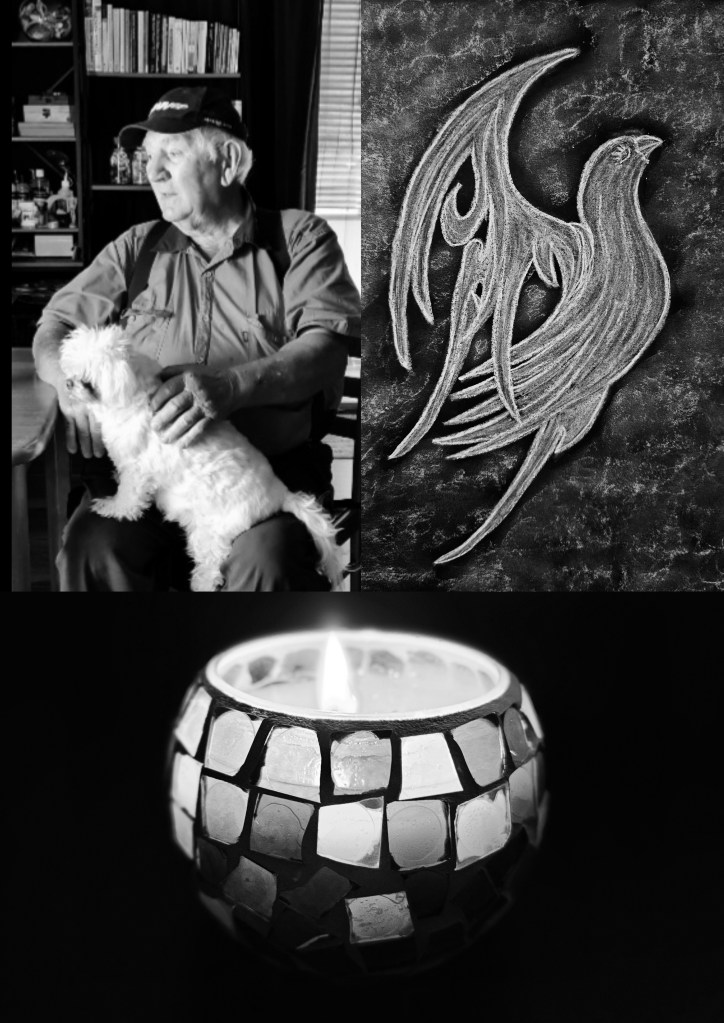
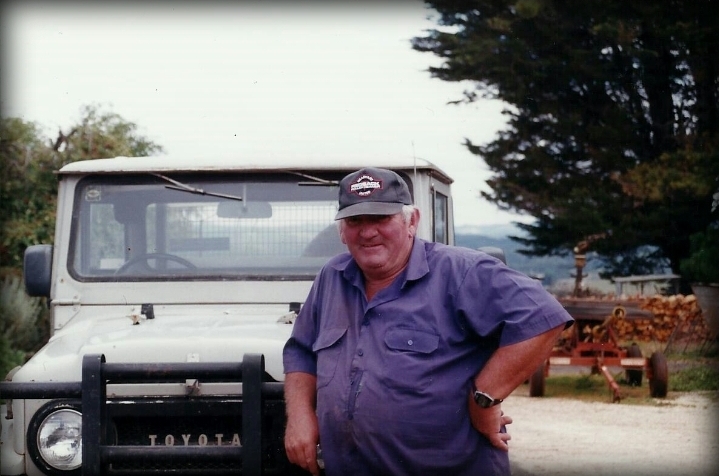
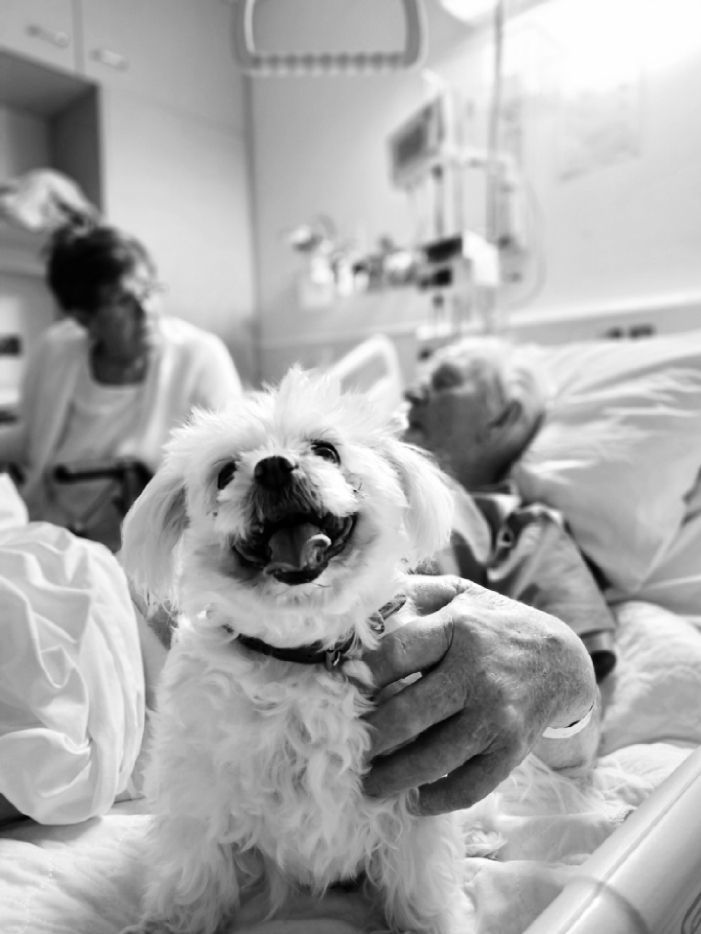
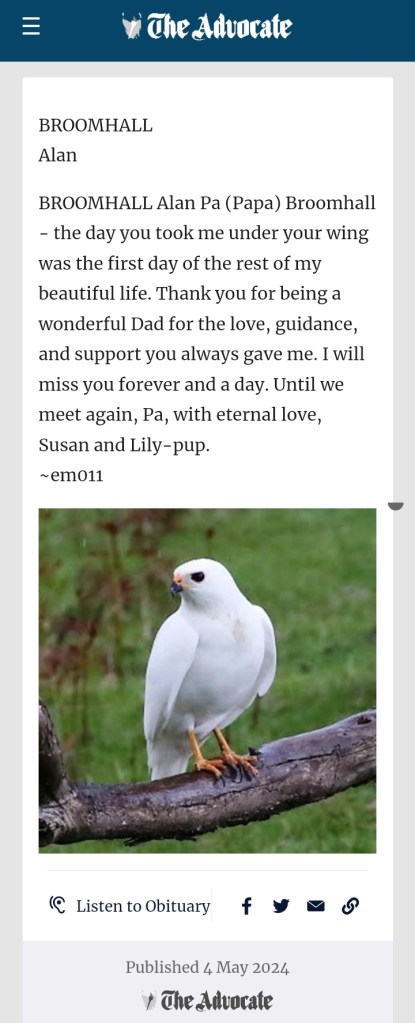
In honour of my Pa (Dad) and Lily’s Papa who passed away in the presence of my mother and I in April 2024. Loved, cherished, honoured, missed, forever and a day…
Following the life events which have unfolded for me over this past few months there hasn’t been much time for me to put pen to paper, let alone simply to have a period of deep thoughts, journalling in the hope of finding a path through the heavy fog. Long drives, hospitals, care homes, funeral homes, with a stop-off “home” to freshen up and go again. Power naps become the new sleep. The kindness of strangers handing you a warm drink as you sit quietly, holding space with someone so dear, so important and so gravely unwell, becomes “just enough” to help you continue. The torrent of emotions never experienced before begins to find a place in your life that you compartmentalise to cope.
Surely there are life lessons at times like these? It certainly makes us wonder about the meaning and purpose of life.
Amid the feeling of hopelessness, there’s a spark of a fire inside of you that tells you otherwise, that it’s worth it, things will get better, and no matter what happens, never lose sight of the things that mean the world to you.
We must listen to that fire inside of us all because it is telling us there is still hope. The sadness, the tension and the negative thoughts have been gnawing away at our self perception and life dreams.
Life wasn’t just meant to be barely lived, or vaguely experienced, watched from the sidelines. You know there’s so much more!
It’s time to feel free again. To take control over our lives. Let this adversity be our greatest lesson and face it head on with determination and and innate tenacity.
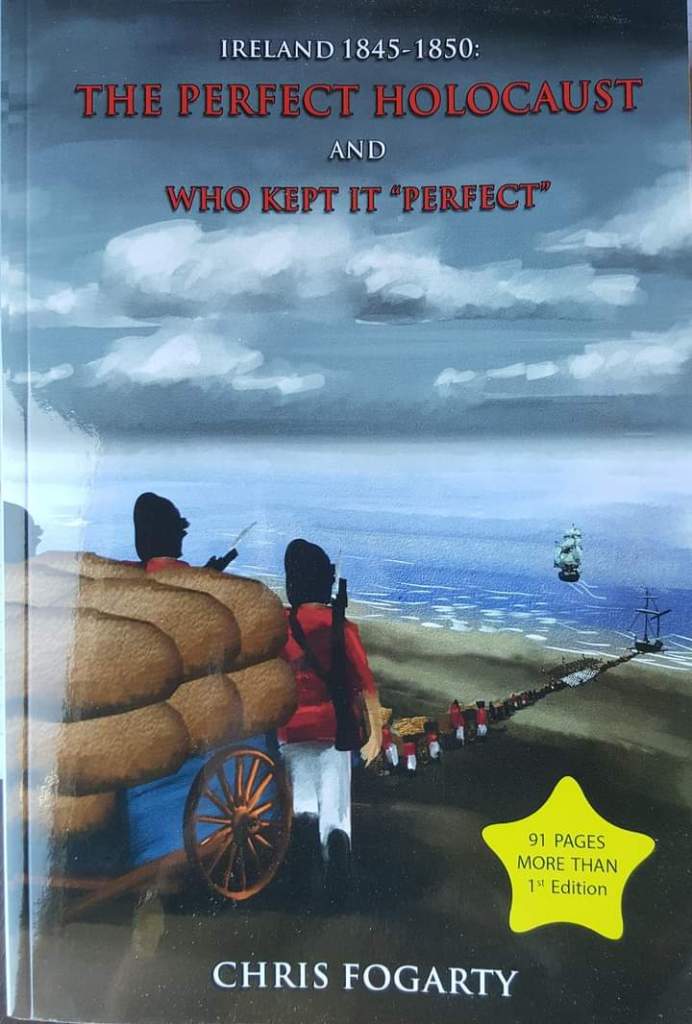
The untold and largely unknown part of history has been presented in the most comprehensive manner through this amazing piece of well researched literature. When research is written in such a professional way that it can itself identify possible issues arising from it, to me, it is high level work. It is not a comfortable reality to read of, but one that must be told and told in the way this one has been. The amount of consultation that went on throughout the development of this speaks for itself in the breadth of areas the writer has covered. Not only do the words tell an incredibly difficult story that has needed to be told for far too long, its visual aids of mass grave sites and photographs, the graphs, tables and lists give you moment to pause and be taken directly to those moments in time which is a rare way of telling such a story. It is brave, it is comprehensive, and the magnitude of this work will certainly strike chords in many a heart. The evidence presented is undisputable and provides a great opportunity for generations to now look to in order to better understand how what happened then impacts on what has happened since and what is happening now and into the future.
This book might well cause discomfort to some who refuse to acknowledge the truth in history and these attempts at genocide that were brutal, barbaric and worse the attempted cover-ups that left voices unheard. Now those voices are being heard and this needed to happen for a long time. It has been a privilege to read this amazing book and at times quite difficult to think that some of my own ancestors faced the worst of humanity. So many writers in history perpetuate falsehoods to gloss over and keep certain uncomfortable things hidden from society. This is a compelling and brave step in the right direction. I would strongly suggest all people interested in or studying history, sociology, or any of the humanities have this book in their reading lists and on their bookshelves as it will become a point of reference they will often return to. It is about time the liars in history were silenced and the voices of the voiceless were heard as loudly as this brilliant piece of work does. I can not express my gratitude for the dedication that has brought this book to being. “History is a nightmare from which I am trying to awaken”, and as a favourite lecturer of mine said many years ago, “the truth is always longer than a lie”.
To Purchase a copy; Ireland History 1845-1850 The Perfect Holocaust And Who Kept It Perfect: By Chris Fogarty Book is on sale at most book shops In Tasmania online eBay and soon Amazon you can buy directly from please contact jimmy as below. Price of the book $45.50 money raised from the sale of these books going towards monuments mass unmarked graves and to homeless crisis.
To purchase a copy please contact: jimmyfurey@gmail.com ph:0451980352 Facebook: J J Bikes Furey
Sometimes things line up, sometimes they don’t. Change is unavoidable in life. We all go through experiences that shape us. We learn what really matters and what doesn’t. We are all explorers in this world, filled with curiosity and dreams, moving through different stages and phases. Mistakes teach us valuable lessons, and we are presented with opportunities for personal growth. As we grow physically, emotionally, and spiritually, we can gain knowledge and become the embodiment of the lives we aspire to live.
What we know, think, see, hear, feel, imagine, sense, and learn are all essential for our transformation.









 Spiritual, Creative & Academic Writing & Arts by Susie j